
Introduction
Do you ever feel like your paycheck disappears as soon as it arrives? If so, you’re not alone. Managing personal finances can be overwhelming, especially when you don’t know where your money is going. Without a clear understanding of your financial inflows and outflows, saving for the future or even meeting your monthly obligations can feel impossible.
But here’s the good news—tracking your finances isn’t as complicated as it sounds. With the right tools and mindset, anyone can gain control of their money. In this article, I’ll break down step-by-step strategies to help you track your finances effectively, identify areas to save, and work toward your financial goals.
Why Tracking Your Finances Matters
Tracking your finances isn’t just about knowing how much you earn and spend; it’s about empowering yourself to make informed decisions. Here are some compelling reasons why financial tracking is essential:
1. Avoid Financial Surprises
Imagine an unexpected medical bill or a car repair derailing your monthly budget. By tracking your expenses, you can plan ahead for such scenarios, ensuring you’re never caught off guard.
2. Identify Spending Patterns
When you know where your money goes, you can spot unnecessary expenses. For instance, eating out three times a week may be draining your wallet more than you realize.
3. Achieve Your Savings Goals
Whether you’re saving for a vacation, building an emergency fund, or investing in your future, tracking helps you allocate funds toward what truly matters.
4. Reduce Debt
Keeping track of your finances can help you prioritize debt repayment, whether it’s a credit card bill or a personal loan.
5. Peace of Mind
There’s something empowering about knowing your financial situation at all times. It removes stress and gives you clarity.
Steps to Track Your Finances Effectively
Step 1: Record Your Income
The first step is understanding how much money you bring in every month. This includes:
- Primary Income: Your salary or business income.
- Secondary Income: Freelance work, rental income, or side hustles.
Pro Tip:
Maintain a simple spreadsheet or use a budgeting app to record your income. For example:
| Month | Source | Amount |
|---|---|---|
| November | Salary | ₹50,000 |
| November | Freelance Work | ₹10,000 |
Step 2: Categorize Your Expenses
Categorizing your expenses gives you a clear picture of where your money is going. Divide your expenses into:
- Fixed Expenses: Rent, EMI, insurance premiums.
- Variable Expenses: Dining out, shopping, entertainment.
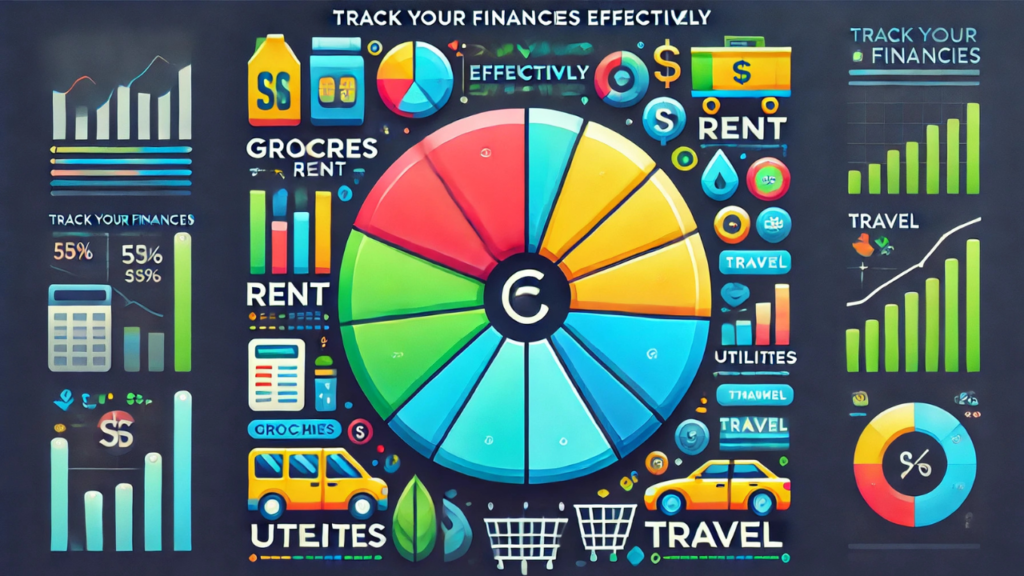
Common Expense Categories:
- Housing (Rent, Utilities)
- Transportation (Fuel, Maintenance)
- Groceries
- Savings and Investments
- Entertainment
Pro Tip: Keep it simple. Overcomplicating categories can make tracking tedious.
Step 3: Choose a Tracking Method
You can track your finances manually, using tools, or a combination of both.
Manual Tracking:
- Use a pen and notebook or an Excel sheet to record every transaction.
- Example Excel template:
| Date | Description | Category | Amount | Balance |
|---|---|---|---|---|
| 01-Nov-24 | Salary | Income | ₹50,000 | ₹50,000 |
| 02-Nov-24 | Grocery Shopping | Groceries | ₹5,000 | ₹45,000 |
Automated Apps:
Apps like Walnut, Money Manager, or YNAB (You Need a Budget) can sync with your bank accounts to track expenses automatically.
Hybrid Approach:
Track fixed expenses manually but automate small daily transactions like coffee or snacks.
Step 4: Monitor Your Finances Regularly
Review your finances weekly or monthly to stay updated. During these reviews:
- Look for overspending in any category.
- Check if you’re on track with your savings goals.
Pro Tip: Set reminders to review your finances on a specific day each week.
Step 5: Set Clear Financial Goals
Tracking your finances becomes purposeful when tied to specific goals. Examples:
- Short-Term Goal: Save ₹20,000 in 6 months for a vacation.
- Medium-Term Goal: Build a ₹2 lakh emergency fund in 2 years.
- Long-Term Goal: Invest for retirement or buy a house.
Break down these goals into smaller monthly targets.
Step 6: Adjust and Improve
Life changes, and so should your financial plan. Revisit your budget every few months:
- Are there new expenses to account for?
- Are your income sources stable?
Adjust your budget accordingly.
Best Tools to Track Your Finances
Effective financial tracking becomes much easier when you use the right tools. Here are some of the best options, tailored for Indian users, to help you get started:
1. Apps for Indian Users
Budgeting apps are one of the simplest ways to track your finances. They automate much of the process, saving you time and effort.
- Walnut:
Walnut automatically tracks your expenses by analyzing SMS alerts from your bank or credit card. It categorizes your spending, helping you see where your money goes without manual input. You can set budget limits, and Walnut will notify you if you’re overspending in a category. - Money Manager:
A beginner-friendly app that offers easy manual input for tracking expenses and income. It provides simple charts and graphs to help visualize your spending habits. The app is perfect if you prefer a straightforward interface with minimal features. - YNAB (You Need a Budget):
This app is ideal for those who want a more detailed and proactive approach to budgeting. YNAB focuses on allocating every rupee you earn to specific categories, encouraging you to “give every rupee a job.” While it’s a paid app, its features like goal tracking and syncing across devices make it worth the investment for detailed planners.
2. Spreadsheets
If you’re someone who likes full control over your data and prefers customization, spreadsheets are an excellent option.
- Google Sheets or Excel:
Create a simple spreadsheet to record your income, expenses, and savings. You can customize it to include formulas that calculate totals, track monthly trends, or highlight overspending.Example Template:DateDescriptionCategoryAmountBalance01-Nov-24SalaryIncome₹50,000₹50,00002-Nov-24Grocery ShoppingGroceries₹5,000₹45,00005-Nov-24Electricity BillUtilities₹2,000₹43,000 - Advantages:
- Complete customization: You can tailor the sheet to your specific needs.
- Data transparency: All your information stays with you, ensuring privacy.
- No cost: Google Sheets is free to use.
- Tips for Efficiency:
- Use ready-made budgeting templates available online for quick setup.
- Schedule a weekly or monthly reminder to update your sheet consistently.
3. Envelope Budgeting
If you primarily deal in cash, the traditional envelope budgeting system can be a game-changer. This old-school method is simple yet incredibly effective for managing day-to-day expenses.
- How It Works:
Divide your cash into separate envelopes, each labeled for a specific spending category (e.g., ₹5,000 for groceries, ₹3,000 for transportation). Use only the cash in the designated envelope for that category. Once the cash is gone, you can’t spend more in that category until the next month. - Why It’s Effective:
- Creates a physical limit for spending, which is easier to stick to than swiping a card.
- Instantly helps you see how much money is left in each category.
- Digital Adaptation:
For those who use online payments, you can create virtual “envelopes” using apps like Goodbudget. These apps replicate the traditional system but allow you to track expenses digitally.
How to Choose the Right Tool
The best tool depends on your lifestyle and preferences:
- Use Walnut or Money Manager if you want automation and ease of use.
- Opt for YNAB if you’re a detail-oriented planner who wants advanced features.
- Stick to spreadsheets if you prefer flexibility and full control over your data.
- Try envelope budgeting if you deal mostly in cash and need stricter spending limits.
By combining one or more of these tools, you can create a personalized system that works best for your financial goals and habits. Start small, experiment, and find the tool that keeps you consistent in tracking your finances.

Common Mistakes to Avoid When Tracking Your Finances
Tracking your finances is an essential step toward financial freedom, but it’s not immune to mistakes. Many people start enthusiastically but falter along the way due to avoidable errors. Here are some common pitfalls and tips to help you steer clear of them:
1. Ignoring Small Expenses
One of the biggest mistakes people make is underestimating the impact of small, everyday expenses. While ₹50 for a cup of chai or ₹200 for an impulse snack may not seem like much, these amounts can quickly add up over time.
- Example:
If you spend ₹50 on chai every day, that’s ₹1,500 a month and ₹18,000 a year! Similarly, a weekly ₹500 splurge on snacks or fast food could cost ₹24,000 annually. - Why It Matters:
These small, unnoticed expenses can eat into your budget, reducing your ability to save or invest. Often referred to as “leaks” in your financial plan, they can derail your progress toward long-term goals. - How to Avoid It:
- Track every expense, no matter how small. Apps or a simple notebook can help.
- Set limits on discretionary spending, such as dining out or entertainment.
- Replace costly habits with affordable alternatives, like brewing coffee or chai at home.
2. Not Reviewing Your Finances Regularly
Tracking finances without regular reviews is like setting a budget and never checking if you’re following it. Many people diligently record their expenses but fail to analyze their spending patterns or adjust their habits.
- Why It Matters:
Regular reviews help you identify trends, spot areas of improvement, and ensure you’re staying on track with your goals. Without this step, you might continue overspending in certain categories without realizing it. - How to Avoid It:
- Schedule a specific day each week or month for a financial review.
- Compare your actual spending with your budget to identify any discrepancies.
- Ask yourself: Are there unnecessary expenses you can cut? Are you saving enough to meet your goals?
Pro Tip: Use visuals like charts or graphs in apps or spreadsheets to quickly analyze your spending trends over time.
3. Complicating the Process
Another common mistake is making the tracking process overly complex. Using too many categories, tools, or methods can make financial tracking feel overwhelming, causing people to quit altogether.
- Why It Matters:
Financial tracking should simplify your life, not add stress. If the process is too tedious or time-consuming, you’re less likely to stick with it in the long run. - How to Avoid It:
- Keep it simple by limiting expense categories to 6-8 key areas, such as rent, utilities, groceries, and entertainment.
- Use one primary tool or method that you’re comfortable with—be it a budgeting app, spreadsheet, or notebook.
- Automate where possible. For example, apps like Walnut can categorize expenses automatically, saving you time and effort.
Pro Tip: Start small and gradually refine your system. It’s better to track consistently with a basic method than to burn out trying to track every minor detail.
How Tracking Helps Achieve Financial Freedom
Tracking your finances is more than just a budgeting exercise; it’s the cornerstone of financial freedom. Without a clear understanding of where your money comes from and where it goes, achieving financial independence can feel like an uphill battle. Here’s how tracking can pave the way for a more secure financial future:
1. Stay in Control of Your Money
When you actively track your income and expenses, you gain a clear picture of your financial health. This awareness allows you to make informed decisions, avoid overspending, and ensure your money is being used effectively. Tracking eliminates guesswork and gives you the power to take charge of your finances instead of feeling like money is controlling you.
2. Allocate Funds Toward Wealth-Building Investments
Financial tracking helps you identify areas where you can cut back on unnecessary expenses. The money you save can then be redirected toward investments that grow your wealth over time, such as mutual funds, stocks, or real estate. These investments are the key to building passive income streams that contribute to financial freedom.
3. Avoid Unnecessary Debt
By staying on top of your finances, you’re less likely to rely on loans or credit cards to cover expenses. Tracking helps you plan for upcoming costs and build an emergency fund, reducing the risk of falling into a debt spiral.
4. Achieve Financial Goals Faster
Whether it’s saving for a dream vacation, building a retirement corpus, or becoming debt-free, tracking ensures that every rupee you earn works toward your goals. It allows you to measure progress and make adjustments as needed, keeping you motivated and focused.
In short, tracking your finances is a roadmap to achieving financial freedom. It provides clarity, builds discipline, and ensures that your financial journey aligns with your long-term aspirations.
Final Thoughts
Tracking your finances doesn’t have to be overwhelming. Start small—record your income, categorize your expenses, and review them regularly. Over time, you’ll gain better control over your money and work toward financial freedom.
If you’re ready to take the first step, try tracking your expenses for a month. You’ll be surprised by the insights you uncover.
If you found this guide helpful, check out our article on How to Build an Emergency Fund: A Beginner’s Guide to start your savings journey today!